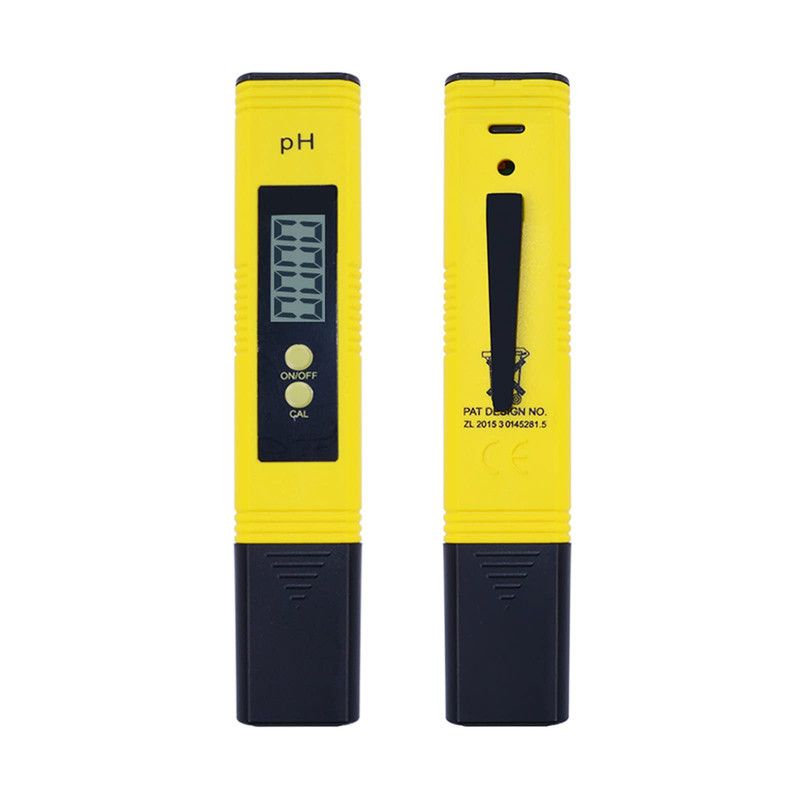
instructions:
When measuring soil pH and humidity, first insert the probe as deeply as possible into the soil, leaving about 1 centimeter above the probe
Move the button on the pen to MOIST, MOIST is the water bond, corresponding to MOIST on the table, DRY is dry, WET is wet, values 1-3 (red part) indicate the need for watering, 4-7 (green part) are appropriate, please adjust the watering time according to the plant variety, 8-10 (blue part) indicates too wet
Move the button on the pen to PH, PH is the pH bond, corresponding to the values of 8-3.5 on the table, ALKALINE is a base, ACDIC is acidic, and a value of 7 is basically neutral. The smaller the value, the greater the acidity. Please adjust the soil pH according to the variety of plants
matters needing attention:
- When using, be careful not to touch stones when inserting the electrode, and do not apply too much force, otherwise it may damage the electrode
After use, the electrodes should be washed clean in a timely manner (It is strictly prohibited to directly measure in water).
- Cannot be used in soil for a long time! To avoid damage.
Soil acidity and alkalinity
Soil acidity and alkalinity, also known as "soil reaction". It is the acid-base reaction of soil solution. It mainly depends on the concentration of hydrogen ions in the soil solution, expressed as pH value. A solution with a pH value of 7 is a neutral solution; A pH value less than 7 indicates an acidic reaction; A pH value greater than 7 indicates an alkaline reaction. The pH of soil can generally be divided into the following levels:
PH value, soil acidity and alkalinity
<4.5 Extremely strong acidity
4.5-5.5 Strong acidity
5.5-6.5 acidity
6.5-7.5 Neutral
7.5-8.5 Alkaline
8.5-9.5 Strong alkalinity
9.5 extremely strong alkalinity
The acidity and alkalinity of soil have a significant impact on soil fertility and plant growth. Many soils in northwest and northern China have high pH values, while red soil in southern China has low pH. Therefore, crops and plants that are suitable for soil pH can be planted. Acid loving tea trees can be planted in red soil areas, while alfalfa has strong alkali resistance.
What's in the box
1 × Three in one horticultural detector