SALE
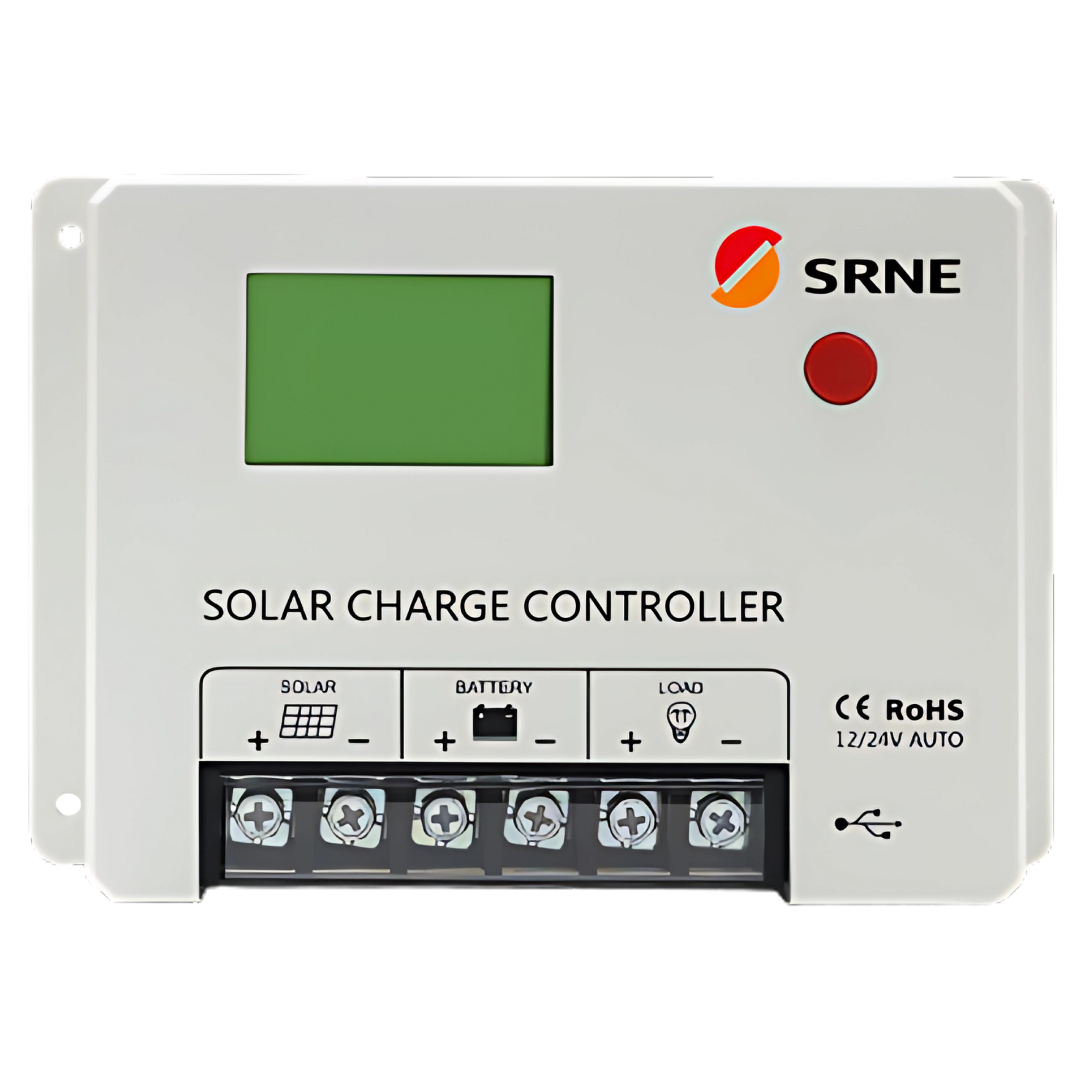
SR-HC2420-C PWM Solar Charge Controller - 20A with RS485 Communication

SR-HC2420-C PWM Solar Charge Controller - 20A with RS485 Communication

The SR-HC2420-C is a PWM solar charge controller with a 20A charging current and 20A load current capacity. It supports …
No reviews yet
R 89.00R 106.80
🚚 Ships in 4-6 work days

The SR-HC2420-C is a PWM solar charge controller with a 20A charging current and 20A load current capacity. It supports RS485 communication and is compatible with five different battery types: Custom,...

🛡️
Warranty
6-Month Limited Warranty.
↩️
Return Policy
Hassle-Free Exchanges & Returns for 7 Days.

Product Information

SKU98369813
Stock StatusIn Stock
Safe Checkout

The SR-HC2420-C is a PWM solar charge controller with a 20A charging current and 20A load current capacity. It supports RS485 communication and is compatible with five different battery types: Custom, Sealed Lead-Acid (Factory Default), Gel Lead-Acid, Flooded (Open Cell) Lead-Acid, and Lithium (Default: LIFEPO4).

Features

  • High-Speed Control Chip and LCD: The controller utilizes a 32-bit high-speed main control chip and features a large-screen LCD, offering adjustable charging and discharging parameters.
  • Battery Type Support: It supports five types of batteries: Custom, Sealed Lead-Acid, Gel Lead-Acid, Flooded Lead-Acid, and Lithium (LIFEPO4 is the default).
  • RS485 Communication: The controller supports RS485 communication with an adjustable baud rate, up to a maximum of 115200 bps, and uses the ModBus communication protocol.
  • Automatic Voltage Identification: The system automatically detects the voltage of lead-acid batteries.
  • PWM Charging Management: It features multi-stage PWM charging management, with the option to turn off load charging for voltage-sensitive loads.
  • Temperature Compensation: The controller automatically adjusts charging parameters to compensate for temperature variations.
  • Rich Load Working Modes: It offers various load working modes to accommodate different types of DC loads.
  • Protective Functions:
    Reverse polarity protection
    Open circuit protection
    High temperature protection
    Overcurrent/short circuit protection (self-recovery type without damage to the controller)
    Dual MOS anti-backflow circuit for ultra-low heat generation.
  • Lithium Battery Activation: The controller includes a lithium battery activation function.
  • User-Friendly Interface: The large-screen LCD and dynamic interface provide an intuitive and easy-to-use design.

Operation Instructions

  1. Battery Connection: First, connect the battery to the controller. If the connection is correct, the screen will light up. If not, check the connections.
  2. Solar Panel Connection: Connect the solar panel. If there is enough sunlight and the panel's voltage exceeds the battery voltage, the sun icon will appear on the LCD. If not, check the connection.
  3. Load Connection: Connect the load cable to the load output terminal. Ensure the load does not exceed the controller's rated current.
  4. Heat Dissipation: The controller will generate heat during operation. It should be installed in a well-ventilated environment.
  5. Cable Selection: Use appropriately sized cables to avoid excessive voltage loss and misjudgment by the controller.
  6. Common Positive Electrode Design: If grounding is required, ground the positive electrode.
  7. Battery Maintenance: Ensure the battery is fully charged at least once a month to avoid permanent damage. A fully charged battery occurs when more energy enters than is used by the load.
  8. Terminal Connection: Ensure all wiring terminals are securely fastened to avoid potential damage from excessive current.

Specifications

  • Rated Charging Current: 20A
  • Rated Load Current: 20A
  • Current Display Function: Displays both charging and discharging current.
  • System Voltage: 12V/24V (automatic identification)
  • Rated Power:
    12V: 300W
    24V: 600W
  • No-Load Loss:
    <7mA at 12V
    <10mA at 24V
  • Maximum PV Input Voltage: Protection starts when the voltage exceeds 55V; charging stops above 55V, but resumes below 50V.
  • Maximum Allowable Battery Voltage: <32V
  • Battery Type: Default Sealed Lead-Acid (SLD)
  • Over-Voltage Protection: 16.0V
  • Equalizing Charging Voltage: 14.6V
  • Boost Charging Voltage: 14.4V
  • Float Charging Voltage: 13.8V
  • Charging Reconnect Voltage: 13.2V
  • Over-Discharge Reconnect Voltage: 12.6V
  • Over-Discharge Voltage: 11.1V
  • Equalizing Charging Time: 2 hours
  • Boost Charging Time: 2 hours
  • Temperature Compensation: -3.0mV/ C/2V
  • Light Control Voltage:
    Light control on: 5V (x2 for 24V)
    Light control off: 6V (x2 for 24V)
  • Turn-On Delay for Light Control: 1 minute
  • Communication Method: RS485
  • Baud Rate: 2400-115200bps
  • Communication Protocol: ModBus
  • Operating Temperature: -35 C to 60 C
  • Altitude: 3000m
  • Protection Grade: IP32
  • Net Weight: 180g
  • Protection Functions:
    Battery panel short-circuit protection
    Battery panel and battery reverse connection protection
    Over-temperature protection
    Load overload protection
    Short circuit protection
  • Product Dimensions: 134mm x 85mm x 36mm

Note: For a 24V system, the voltage points are doubled, and for a 48V system, the voltage points are quadrupled.

What's in the box
1 x SR-HC2420-C PWM Solar Charge Controller

The SR-HC2420-C is a PWM solar charge controller with a 20A charging current and 20A load current capacity. It supports RS485 communication and is compatible with five different battery types: Custom, Sealed Lead-Acid (Factory Default), Gel Lead-Acid, Flooded (Open Cell) Lead-Acid, and Lithium (Default: LIFEPO4).

Features

  • High-Speed Control Chip and LCD: The controller utilizes a 32-bit high-speed main control chip and features a large-screen LCD, offering adjustable charging and discharging parameters.
  • Battery Type Support: It supports five types of batteries: Custom, Sealed Lead-Acid, Gel Lead-Acid, Flooded Lead-Acid, and Lithium (LIFEPO4 is the default).
  • RS485 Communication: The controller supports RS485 communication with an adjustable baud rate, up to a maximum of 115200 bps, and uses the ModBus communication protocol.
  • Automatic Voltage Identification: The system automatically detects the voltage of lead-acid batteries.
  • PWM Charging Management: It features multi-stage PWM charging management, with the option to turn off load charging for voltage-sensitive loads.
  • Temperature Compensation: The controller automatically adjusts charging parameters to compensate for temperature variations.
  • Rich Load Working Modes: It offers various load working modes to accommodate different types of DC loads.
  • Protective Functions:
    Reverse polarity protection
    Open circuit protection
    High temperature protection
    Overcurrent/short circuit protection (self-recovery type without damage to the controller)
    Dual MOS anti-backflow circuit for ultra-low heat generation.
  • Lithium Battery Activation: The controller includes a lithium battery activation function.
  • User-Friendly Interface: The large-screen LCD and dynamic interface provide an intuitive and easy-to-use design.

Operation Instructions

  1. Battery Connection: First, connect the battery to the controller. If the connection is correct, the screen will light up. If not, check the connections.
  2. Solar Panel Connection: Connect the solar panel. If there is enough sunlight and the panel's voltage exceeds the battery voltage, the sun icon will appear on the LCD. If not, check the connection.
  3. Load Connection: Connect the load cable to the load output terminal. Ensure the load does not exceed the controller's rated current.
  4. Heat Dissipation: The controller will generate heat during operation. It should be installed in a well-ventilated environment.
  5. Cable Selection: Use appropriately sized cables to avoid excessive voltage loss and misjudgment by the controller.
  6. Common Positive Electrode Design: If grounding is required, ground the positive electrode.
  7. Battery Maintenance: Ensure the battery is fully charged at least once a month to avoid permanent damage. A fully charged battery occurs when more energy enters than is used by the load.
  8. Terminal Connection: Ensure all wiring terminals are securely fastened to avoid potential damage from excessive current.

Specifications

  • Rated Charging Current: 20A
  • Rated Load Current: 20A
  • Current Display Function: Displays both charging and discharging current.
  • System Voltage: 12V/24V (automatic identification)
  • Rated Power:
    12V: 300W
    24V: 600W
  • No-Load Loss:
    <7mA at 12V
    <10mA at 24V
  • Maximum PV Input Voltage: Protection starts when the voltage exceeds 55V; charging stops above 55V, but resumes below 50V.
  • Maximum Allowable Battery Voltage: <32V
  • Battery Type: Default Sealed Lead-Acid (SLD)
  • Over-Voltage Protection: 16.0V
  • Equalizing Charging Voltage: 14.6V
  • Boost Charging Voltage: 14.4V
  • Float Charging Voltage: 13.8V
  • Charging Reconnect Voltage: 13.2V
  • Over-Discharge Reconnect Voltage: 12.6V
  • Over-Discharge Voltage: 11.1V
  • Equalizing Charging Time: 2 hours
  • Boost Charging Time: 2 hours
  • Temperature Compensation: -3.0mV/ C/2V
  • Light Control Voltage:
    Light control on: 5V (x2 for 24V)
    Light control off: 6V (x2 for 24V)
  • Turn-On Delay for Light Control: 1 minute
  • Communication Method: RS485
  • Baud Rate: 2400-115200bps
  • Communication Protocol: ModBus
  • Operating Temperature: -35 C to 60 C
  • Altitude: 3000m
  • Protection Grade: IP32
  • Net Weight: 180g
  • Protection Functions:
    Battery panel short-circuit protection
    Battery panel and battery reverse connection protection
    Over-temperature protection
    Load overload protection
    Short circuit protection
  • Product Dimensions: 134mm x 85mm x 36mm

Note: For a 24V system, the voltage points are doubled, and for a 48V system, the voltage points are quadrupled.

What's in the box
1 x SR-HC2420-C PWM Solar Charge Controller

More in Solar Power Parts